News Build log
PID before RL: why we start with a depth seeker
Before any neural network touches the car, a few lines of feedback control have to drive it. Here is why every GOAT RACER student starts there.
In September 2025, before any reinforcement learning ran on the car, we wrote a depth seeker. It is model-free: it looks at the depth camera, finds the deepest open space, and steers toward it with a PID loop. No model, just feedback.
"If we couldn't get this working, there's no point in doing the RL."
What it takes
- Vision. A RealSense depth camera, a region of interest, and thresholding. Resolution and frame rate trade off: lower resolution is faster but noisier.
- Motor. Calibrating the VESC motor controller and choosing a control scheme.
- Coordination. Pure Python, with ZeroMQ between the parts.
The first run was rough. After some PID tuning, the car found its way.
A figure eight with naive PID. And the same idea avoiding obstacles.
Why it still matters
The depth seeker is a sanity check for the whole stack: sensors, timing, motor control. If it fails, the problem is not the neural network.
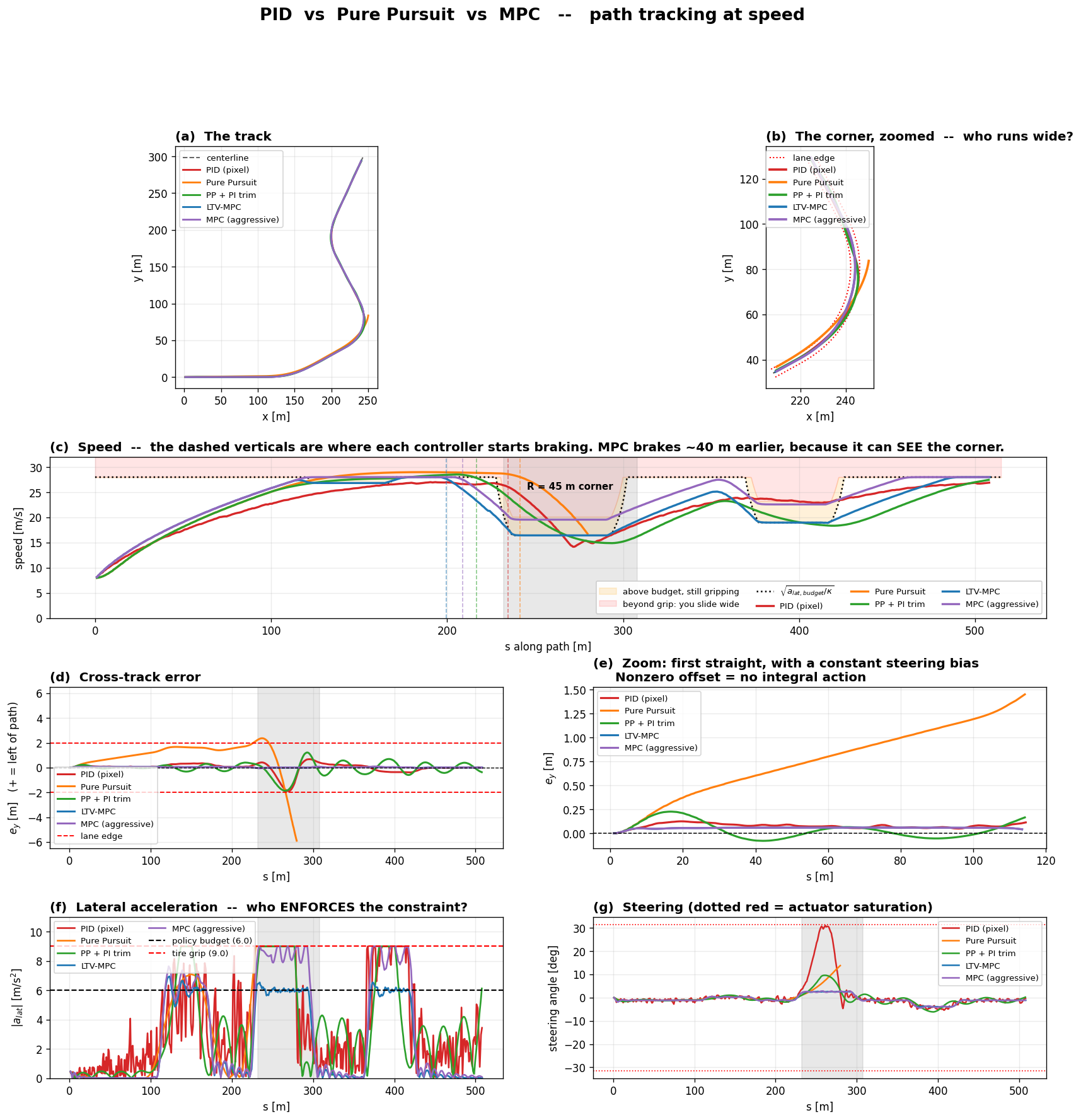
It is also the best way to show why RL is worth it. In our workshops, groups tune the depth seeker live on the track and find its limits for themselves. Then they train a policy that beats it.